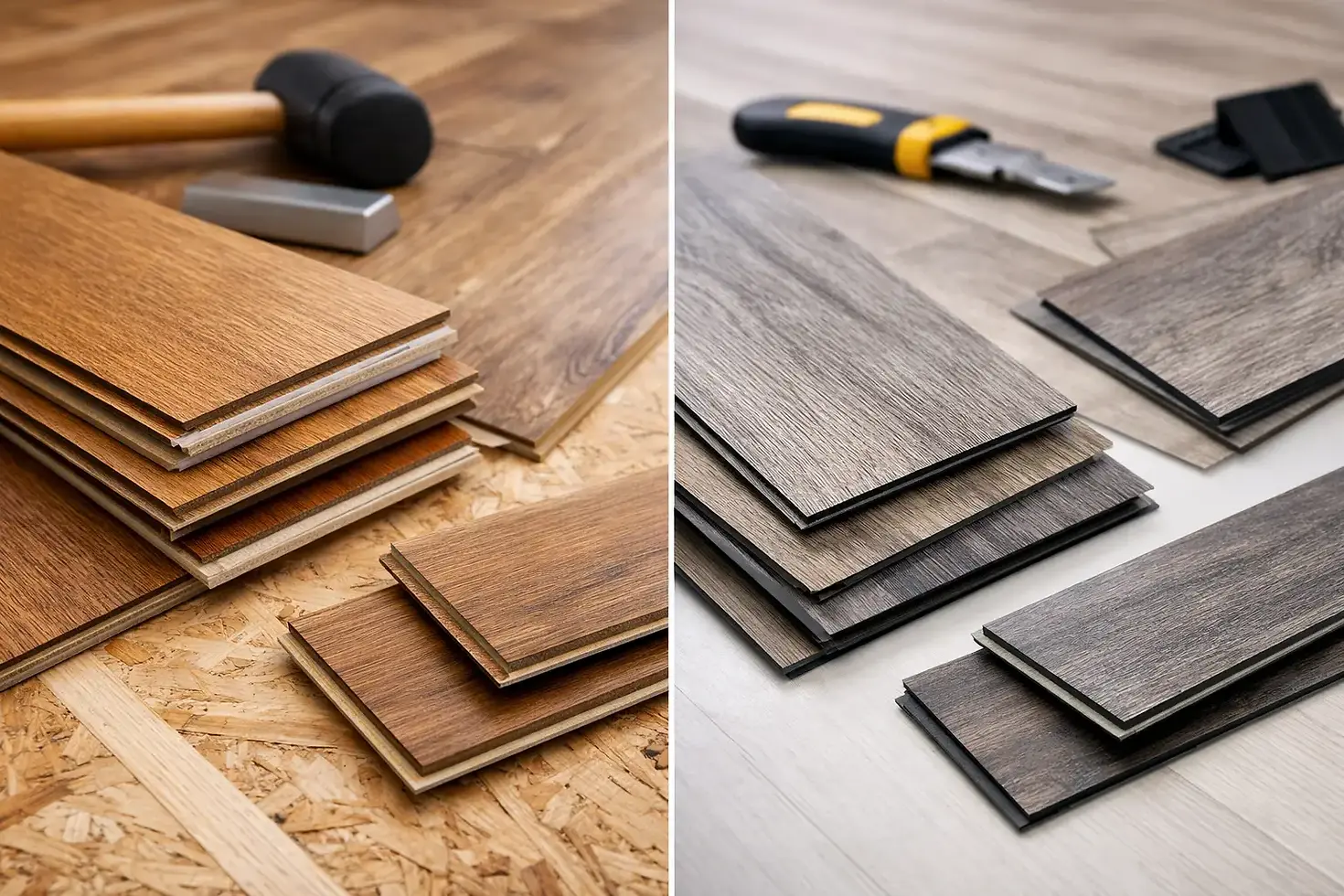
Laminate Flooring vs Vinyl Plank
A floor can look great in the showroom and still be the wrong fit for your house. That is why homeowners often ask about laminate flooring vs vinyl plank after they start thinking beyond color and price. The better choice usually comes down to how your family lives, where the flooring is going, and how much wear that space handles every day.
In South Carolina homes, that question matters even more. Humidity, wet shoes, pets, kids, and heavy traffic all put flooring to the test. If you are updating a kitchen, basement, bathroom, or main living area, it helps to know where laminate shines, where vinyl has the edge, and where a lower upfront price can cost more later.
Laminate flooring vs vinyl plank at a glance
Laminate and vinyl plank can look surprisingly similar once installed. Both are designed to mimic hardwood, both come in a range of colors and textures, and both are often chosen by homeowners who want the look of wood without the price or upkeep of solid hardwood.
The difference is in what they are made of. Laminate flooring typically has a fiberboard core with a printed image layer and a protective wear layer on top. Vinyl plank is made primarily from synthetic materials, which makes it much more resistant to water. That one distinction affects how each product performs in kitchens, bathrooms, laundry rooms, and other spill-prone spaces.
If your top priority is a realistic wood feel underfoot, laminate often wins. If your main concern is moisture, vinyl plank usually comes out ahead.
Cost is important, but it is not the whole story
Many homeowners start with price, and that makes sense. Both laminate and vinyl plank are considered cost-friendly alternatives to hardwood, but product quality varies a lot. Entry-level options in either category may save money upfront, yet they can also wear faster, sound hollow, or show damage sooner.
Laminate is often slightly less expensive than premium vinyl products, but the gap is not always dramatic. Installation costs can also shift the real total depending on subfloor condition, room layout, and whether old flooring needs to be removed first.
What matters most is value over time. A cheaper floor in the wrong room can lead to repairs or replacement sooner than expected. For a busy family home, choosing based on long-term performance often makes more financial sense than choosing based only on the shelf price.
Water resistance is where vinyl plank pulls ahead
Best rooms for vinyl plank
If you are flooring a bathroom, laundry room, mudroom, or basement, vinyl plank is usually the safer bet. Many vinyl products are water-resistant, and some are fully waterproof. That makes them a practical choice for spaces where spills, humidity, or damp conditions are part of normal life.
Laminate has improved over the years, and some newer products offer better moisture resistance than older versions. Still, laminate is generally more vulnerable when water gets into the seams or sits too long on the surface. Once the core swells, the damage is often permanent.
For homeowners in Greenville, Spartanburg, Anderson, Columbia, and nearby areas, that matters in real day-to-day ways. Rainy days, pool traffic, pet water bowls, and kitchen messes are not rare events. In those conditions, vinyl gives you more room for error.
Where laminate can still work well
That does not mean laminate is off the table. In bedrooms, living rooms, hallways, and home offices, laminate can be a very strong option. As long as the space stays relatively dry, laminate often delivers a warm, attractive finish at a good price.
The key is matching the material to the room instead of trying to make one product do everything.
Appearance and feel underfoot
If you want flooring that feels a little more like real wood, laminate often has an advantage. Many homeowners like its thicker construction and slightly firmer, more natural feel. Higher-end laminate can also have realistic texture and grain patterns that look excellent in open living areas.
Vinyl plank has improved a lot in appearance, and many products now offer very convincing wood visuals. Still, some homeowners notice that vinyl feels softer or more synthetic underfoot, especially with lower-cost products.
That said, softness is not always a negative. In kitchens or areas where you stand a lot, some people actually prefer the slightly more forgiving feel of vinyl. This is one of those decisions where personal preference matters just as much as performance specs.
Durability depends on the kind of wear your home sees
Both laminate and vinyl plank are built for active households, but they handle damage differently.
Laminate tends to resist scratches well, which makes it attractive for living spaces with foot traffic, kids, and some pet activity. However, it can be more vulnerable to moisture damage and may chip at the edges if it takes a hard hit.
Vinyl plank handles water better and generally holds up well against everyday scuffs and dents, but durability depends heavily on the wear layer. Better vinyl products usually perform much better than bargain options. If you are comparing samples, that top protective layer matters more than many homeowners realize.
For homes with pets, both can work, but vinyl often offers a little more peace of mind if accidents or water bowl spills are part of the picture.
Installation matters more than many people expect
A good product can still fail with poor installation
Homeowners sometimes focus so much on laminate flooring vs vinyl plank that they overlook the installation itself. That is a mistake. Even a quality floor can develop gaps, movement, uneven spots, or premature wear if the subfloor is not prepared correctly.
Both materials are commonly installed as floating floors, but they still need a clean, level, properly prepped surface. Moisture issues below the floor also need to be addressed before installation begins, especially in lower-level spaces or older homes.
Why professional guidance helps
This is where working with an experienced contractor pays off. A professional can evaluate the room, recommend the right material for the conditions, and make sure the finished floor looks right and lasts. At Power Up Construction, that kind of guidance is part of helping homeowners avoid costly do-overs and choose flooring that fits both their budget and their daily routine.
Which floor is easier to maintain?
Both laminate and vinyl plank are fairly easy to live with compared to hardwood. Regular sweeping, vacuuming, and occasional damp mopping usually keep them in good shape.
Vinyl plank is generally easier when it comes to cleaning up spills because moisture is less of a threat. With laminate, quick cleanup matters more. Too much water during cleaning can cause problems over time, so it is important to follow the manufacturer's care instructions.
If your household is busy and you want low stress maintenance, vinyl often has the edge. If the room is dry and traffic is moderate, laminate can still be very manageable.
The best choice depends on the room and your priorities
Choose laminate if you want:
A more wood-like feel, strong visual appeal in dry living spaces, and a budget-friendly option for bedrooms, hallways, or family rooms.
Choose vinyl plank if you want:
Better protection from moisture, more flexibility in kitchens and bathrooms, and a floor that handles spills and humidity with less risk.
For some homes, the right answer is not one or the other across the whole house. It may make more sense to use laminate in dry main living spaces and vinyl plank in rooms where water is more likely. That approach can balance appearance, performance, and cost without forcing one material into places where it is not the best fit.
A good flooring decision should make your home easier to live in, not harder to maintain. If you are weighing laminate against vinyl plank, think beyond the sample board. Picture muddy shoes by the door, dropped ice from the fridge, pets racing through the hallway, and the way your family actually uses each room. The right floor is the one that still works well after real life hits it.


Comments