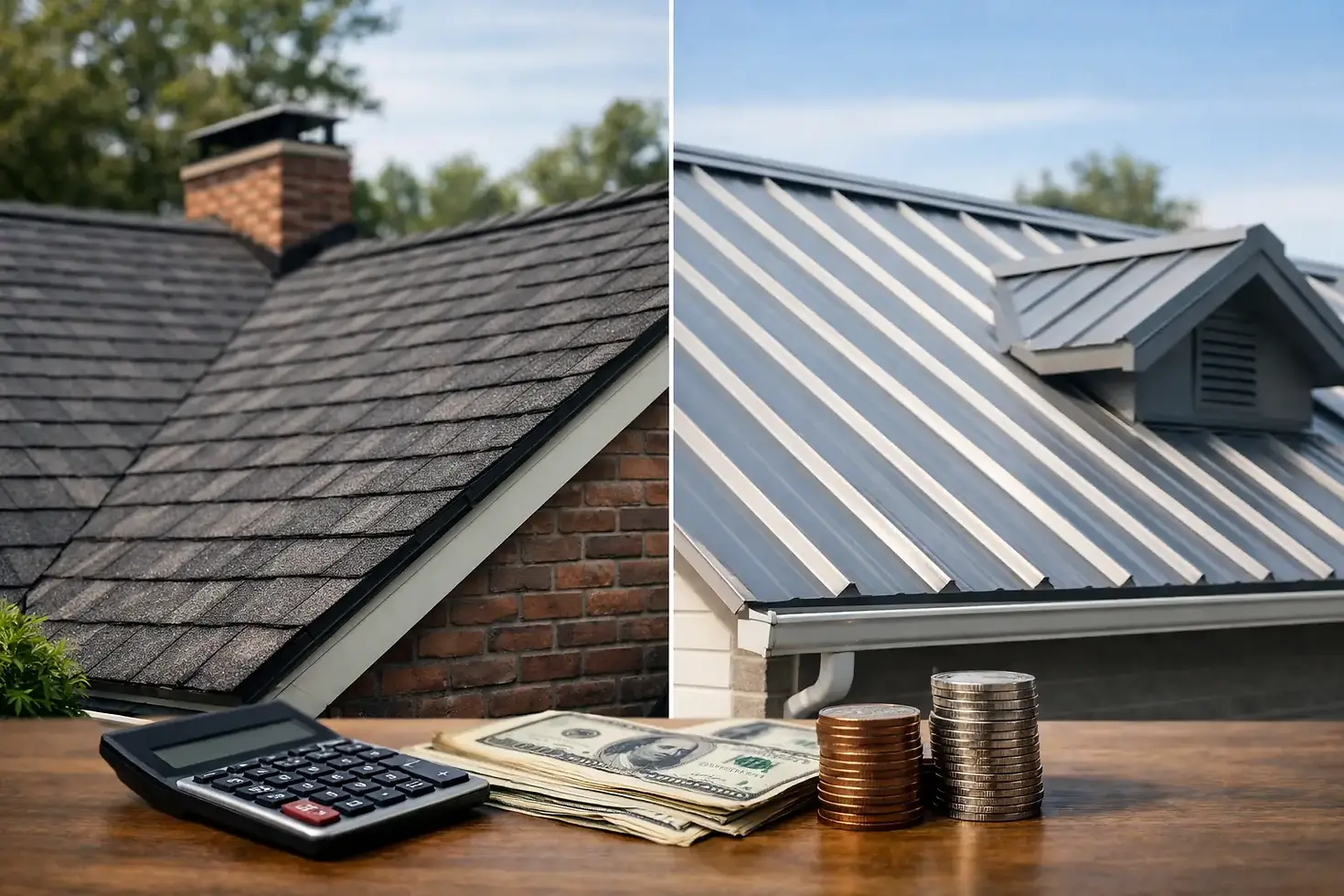
Asphalt Roof vs Metal Roof Cost Guide
Sticker shock usually shows up fast when you compare roofing estimates. One quote for shingles looks manageable, then the metal roof number lands and suddenly the decision feels a lot bigger. If you are weighing asphalt roof vs metal roof cost, the real question is not just what you pay now. It is what you get for that money over the next 20 to 50 years.
For homeowners in South Carolina and nearby North Carolina markets, that difference matters. Heat, humidity, strong storms, and the occasional hail event can all change how a roof performs over time. A lower upfront price can still be the right move, but only if it fits your budget, your plans for the home, and the condition of the structure underneath.
Asphalt roof vs metal roof cost: the upfront price difference
In most cases, asphalt shingles cost less to install than metal roofing. That is the simplest and most consistent part of this comparison. If your main priority is keeping the initial project cost as low as possible, asphalt usually wins.
For many homes, asphalt shingles can cost roughly $4 to $8 per square foot installed, while metal roofing often falls closer to $8 to $16 per square foot installed. Those ranges can move up or down based on the type of shingle or metal panel, roof size, pitch, tear-off needs, underlayment, flashing details, and local labor conditions.
That means a standard-sized home might see a noticeable difference between the two options. An asphalt roof replacement may fit comfortably into a tighter budget, while metal can require a larger investment upfront. For homeowners balancing roofing with other home needs like gutters, flooring, or interior updates, that first price gap is often the deciding factor.
Still, upfront cost is only one part of the conversation. A roof is not just a purchase. It is a long-term system protecting your home, attic, insulation, and interior finishes.
Why metal costs more
Metal roofing generally costs more because the material itself is more expensive, and installation usually requires a higher level of precision. The panels, trim pieces, fasteners, coatings, and specialized accessories all add to the price. On top of that, metal roof installation is not something every crew handles at the same level.
The design of the roof also matters. A simple roofline with fewer penetrations, valleys, and transitions is more straightforward to install in either material. But once a roof has dormers, skylights, chimneys, or complex slopes, the labor and detail work increase. That can push the price up faster on metal than on asphalt.
In other words, the higher cost is not arbitrary. You are paying for a different product, a different installation process, and often a longer expected service life.
Where asphalt shingles still make strong financial sense
Asphalt shingles remain popular for good reason. They are affordable, widely available, and available in styles that work well on many homes across South Carolina. For a homeowner who wants dependable protection without stretching the budget too far, asphalt can be a smart choice.
This is especially true if you do not plan to stay in the home for decades. If you expect to move in seven to ten years, the lower upfront investment may make more sense than paying significantly more for metal. You still want quality installation, proper ventilation, and strong materials, but you may not need the longest-lasting roof on the market to get a solid return.
Asphalt is also easier to match in many repair situations. If a storm damages one section, repairs can sometimes be more straightforward depending on the age of the roof and shingle availability. That does not mean shingles are always cheaper to maintain, but they can be simpler for some homeowners to manage.
Asphalt roof vs metal roof cost over the long term
This is where the gap starts to narrow. Asphalt usually costs less today, but metal can cost less over time depending on how long you stay in the home and how much maintenance or replacement the roof needs.
A typical asphalt shingle roof may last around 15 to 30 years, depending on product quality, weather exposure, attic ventilation, and installation standards. Metal roofing can often last 40 to 70 years. That longer lifespan does not erase the upfront cost, but it changes the math.
If you install asphalt and need another replacement later while metal is still performing well, the lifetime cost picture shifts. Add in possible repair savings and potential energy benefits, and metal can become more competitive than it first appears.
That said, not every homeowner will stay in the same home long enough to fully realize those long-term savings. If your timeline is shorter, asphalt may still offer the better value for your situation.
Energy efficiency and utility costs
Metal roofing can reflect more solar heat than many asphalt shingle systems, especially when it includes reflective coatings or lighter colors. In hot Southern climates, that may help reduce attic heat and ease cooling demands during peak summer months.
Will that create dramatic utility savings for every home? Not always. Insulation levels, attic ventilation, shade, roof color, and HVAC efficiency all play a role. But metal often has an edge here, particularly on homes that get strong sun exposure.
Asphalt shingles can still perform well when the roof system is built correctly. Good ventilation and quality underlayment matter. Homeowners should be careful about assuming material alone will solve every energy issue.
Repairs, storm performance, and insurance factors
Roofing decisions in South Carolina are rarely just about appearance. Storms matter. Wind matters. Heavy rain matters. In some areas, insurance conversations matter too.
Metal roofs are often praised for durability, but performance depends on the product and installation method. A properly installed metal roof can hold up very well against the elements. At the same time, not all metal systems are equal. Gauge, panel style, fastening method, and trim details all affect performance.
Asphalt shingles also vary widely in quality. Architectural shingles generally perform better than basic 3-tab options. Impact ratings and wind ratings can make a difference when comparing products.
Repair costs can go either way. Small asphalt repairs may be less expensive in some cases, while matching older shingles can be difficult. Metal may resist certain types of wear better, but repairs can require specialized knowledge and materials. Insurance carriers may view roofing materials differently based on policy terms and local risk factors, so it is worth checking before making a final decision.
Home value and curb appeal
A new roof should protect your home first, but it also affects resale value and appearance. Asphalt shingles give homeowners a familiar look that fits most neighborhoods. They come in a wide range of colors and profiles, and they often blend easily with traditional home styles.
Metal roofing can create a more distinctive appearance. On the right home, it can look clean, modern, and high-end. Some buyers see that as a major plus because of durability and lifespan. Others may simply prefer the traditional look of shingles.
From a resale standpoint, both materials can support home value when the roof is installed well and the style fits the property. The wrong roof is usually not about the material. It is about poor workmanship, low-grade products, or choosing a look that feels out of place for the home.
Which roof is better for your budget?
If your budget is tight and you need reliable protection now, asphalt is often the practical choice. It gives many homeowners a strong balance of cost, appearance, and performance without requiring the larger upfront spend that metal does.
If you want long-term durability, may stay in the home for many years, and can invest more at the start, metal may offer better value over time. It can also be appealing if you prioritize longevity, lower maintenance needs, and potential energy savings.
There is no one-size-fits-all answer. The right choice depends on how long you plan to stay, how your roof is built, what your home has been through weather-wise, and what kind of project budget feels comfortable for your household.
The smartest way to compare estimates
The best roofing decision usually comes from comparing full-system estimates, not just line-item prices. A cheaper quote is not automatically the better value if it cuts corners on ventilation, flashing, underlayment, or installation quality.
Ask what is included in the tear-off, what product line is being used, how penetrations and valleys will be handled, and what warranty coverage applies. Make sure you are comparing similar scopes of work. A well-prepared estimate should help you understand not only the price, but what stands behind it.
At Power Up Construction, that is how we encourage homeowners to look at roofing - not as a rushed purchase, but as a decision that affects comfort, protection, and long-term costs. When you have clear numbers and honest guidance, the right option becomes much easier to see.
A roof should fit your home, your timeline, and your budget without leaving you second-guessing the decision six months later. The best next step is not picking a material off a chart. It is getting a professional inspection and a detailed quote that shows what your home actually needs.


Comments