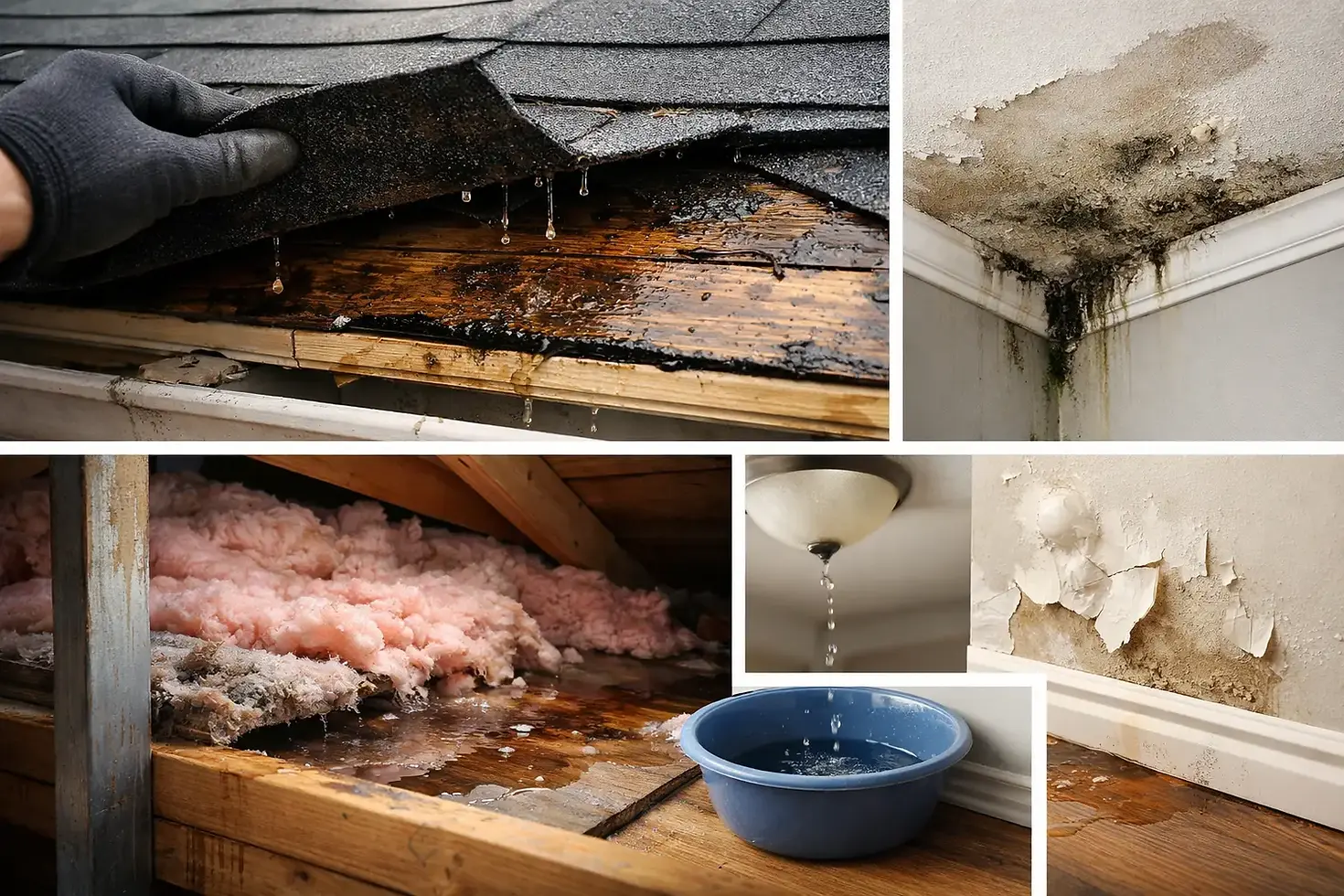
9 Signs of Hidden Roof Leaks at Home
A roof leak does not always announce itself with a drip into a bucket. More often, it shows up quietly - a stain that seems to grow overnight, a musty smell in one room, or peeling paint you keep meaning to fix. Knowing the signs of hidden roof leaks can help you act before a small repair turns into damaged insulation, ruined drywall, mold growth, or a much larger roofing bill.
For homeowners across South Carolina and nearby North Carolina, this matters even more than many people realize. Heavy rain, humidity, wind-driven storms, and aging roofing materials can all create conditions where moisture gets in and stays hidden. By the time water becomes obvious, it may have already traveled far from the original entry point.
Why hidden roof leaks are easy to miss
Water rarely falls straight down from the exact spot where the roof is compromised. It can run along decking, rafters, insulation, and wall cavities before it becomes visible inside your home. That is why the leak you see in a ceiling may not be directly below the real problem.
Hidden leaks are also easy to mistake for other household issues. Homeowners often assume a stain is old, blame peeling paint on humidity, or think a musty smell is coming from a bathroom or crawl space. Sometimes that is true. Sometimes it is your roof asking for attention.
The most common signs of hidden roof leaks
1. Ceiling stains that keep changing
One of the clearest warning signs is a yellow, brown, or copper-colored stain on the ceiling. If the mark gets darker after rain, grows wider over time, or reappears after being painted over, there is a strong chance water is still getting in.
Not every stain points to a roofing issue. Plumbing leaks can create similar marks. The pattern matters. Stains near exterior walls, around chimneys, below roof valleys, or in upper-floor ceilings are often linked to roof problems rather than pipes.
2. Paint or drywall that bubbles, cracks, or peels
Moisture trapped behind walls and ceilings can push paint outward, soften drywall, and cause cracking or bubbling. This is especially common in rooms just below the roofline, around window headers, or near attic transitions.
If the damage keeps returning after cosmetic repairs, it is worth looking deeper. Fresh paint can hide a problem for a short time, but it will not stop moisture from working its way back through the surface.
3. Musty odors in one part of the house
A persistent musty smell in an upstairs bedroom, hallway, bonus room, or attic can point to hidden moisture. When roof leaks soak insulation, wood, or drywall, those materials can hold water long enough to create odor even before you see staining.
This is one of the more overlooked signs of hidden roof leaks because homeowners often focus on visible damage first. If a room smells damp without an obvious reason, it should not be ignored.
4. Mold or mildew where it should not be
Mold around a shower is one thing. Mold appearing on a bedroom ceiling, in an upper corner of a wall, or around attic framing is another. Roof leaks can create the kind of ongoing dampness mold needs to grow, especially in warm, humid climates.
It depends on the location. Some mold issues come from indoor humidity or poor ventilation. But when growth is concentrated near the ceiling or attic and keeps coming back, the roof should be part of the inspection.
5. Warped flooring or trim near exterior walls
Not every roof leak stays in the ceiling. Water can travel downward through wall cavities and show up as swollen baseboards, warped wood trim, or flooring that starts to cup near an outside wall.
This is one reason hidden leaks can become expensive. What starts at the roof can eventually affect multiple areas of the home, making the repair larger than homeowners expect.
6. Damp or compressed attic insulation
Your attic is often the best place to catch a hidden leak early. Insulation that looks flattened, damp, or unusually clumped can signal water entry from above. Even if the leak is not active during the inspection, the insulation may still show where moisture has been.
Wet insulation also loses performance. That means hidden leaks can raise energy costs while creating the conditions for wood rot and mold.
7. Dark spots or water marks on attic wood
Check the underside of the roof decking and the rafters. Dark streaks, staining, soft wood, or areas that look weathered in patches may indicate repeated moisture intrusion. In more advanced cases, you may notice wood beginning to rot or nails showing rust.
A single storm does not always cause major visible damage. More often, a small opening allows water in over months, and the attic tells the story before the living space does.
8. Shingle, flashing, or gutter issues outside
Some of the most important clues are on the exterior. Missing shingles, lifted shingles, damaged flashing around chimneys or vents, clogged gutters, and exposed fasteners can all let water work its way beneath the roofing system.
The challenge is that exterior damage does not always look dramatic from the ground. A roof can appear mostly fine and still have vulnerable areas. That is why professional inspections matter after storms or when interior signs begin to show up.
9. Higher energy bills without a clear reason
This one surprises people, but hidden roof leaks can affect indoor comfort. When insulation gets wet, it stops doing its job well. If your heating and cooling costs climb and you also notice attic moisture, ceiling stains, or musty odors, the problems may be connected.
It is not the first symptom most homeowners notice, and on its own it does not confirm a roof leak. Still, when paired with other warning signs, it is worth taking seriously.
When a small leak becomes a bigger repair
The biggest mistake homeowners make is waiting for obvious dripping water. By that point, the issue may already involve decking, insulation, drywall, paint, and even framing. In some cases, a hidden leak can also complicate insurance claims because the damage appears gradual rather than tied to a recent storm event.
There is also the question of what caused the leak in the first place. Sometimes it is a localized repair, such as damaged flashing or a few compromised shingles. Other times the roof is aging overall, and repeated leaks are a sign that a broader solution makes more financial sense. The right answer depends on the roof's age, material condition, storm history, and how widespread the moisture damage has become.
What homeowners should do next
If you notice one or more of these signs, start by documenting what you see. Take photos of ceiling stains, attic discoloration, exterior roof concerns, and any damage that changes after rainfall. This helps track progression and gives a contractor a clearer picture of what is happening.
Avoid the temptation to treat the symptom only. Repainting a ceiling, cleaning mold, or replacing a section of drywall without fixing the source will usually lead to repeat damage. A proper inspection should look at the roof surface, flashing, attic conditions, ventilation, and any interior evidence of water travel.
For many homeowners, speed matters just as much as cost. A fast inspection can help determine whether you are dealing with a simple repair, storm-related damage, or signs that a larger roofing project is approaching. If insurance may be involved, clear documentation and prompt action can make the process much smoother.
At Power Up Construction, we understand that homeowners want straight answers, fair pricing, and a repair plan they can trust. Roof issues are stressful enough without unclear communication or long delays.
If something in your home has seemed off lately - a stain, a smell, a patch of bubbling paint - trust that instinct. Hidden leaks rarely get better with time, but catching them early can protect your home, your budget, and a lot of unnecessary disruption.


Comments